
Lost in Steyr
The small Austrian town where I was miserable, fell in love with radio, and somehow never left.

I’ve now lived in Austria for well over half my life and this weekend I revisited the town where it all began. I spent 8 months as a language assistant in the small Upper Austrian community of Steyr over the turn of the century as part of my university studies. It was a strange year but I somehow put down roots. Although I did go back for my final year of studies at Durham University and then spent a few months in West Africa, Austria has been my home ever since.
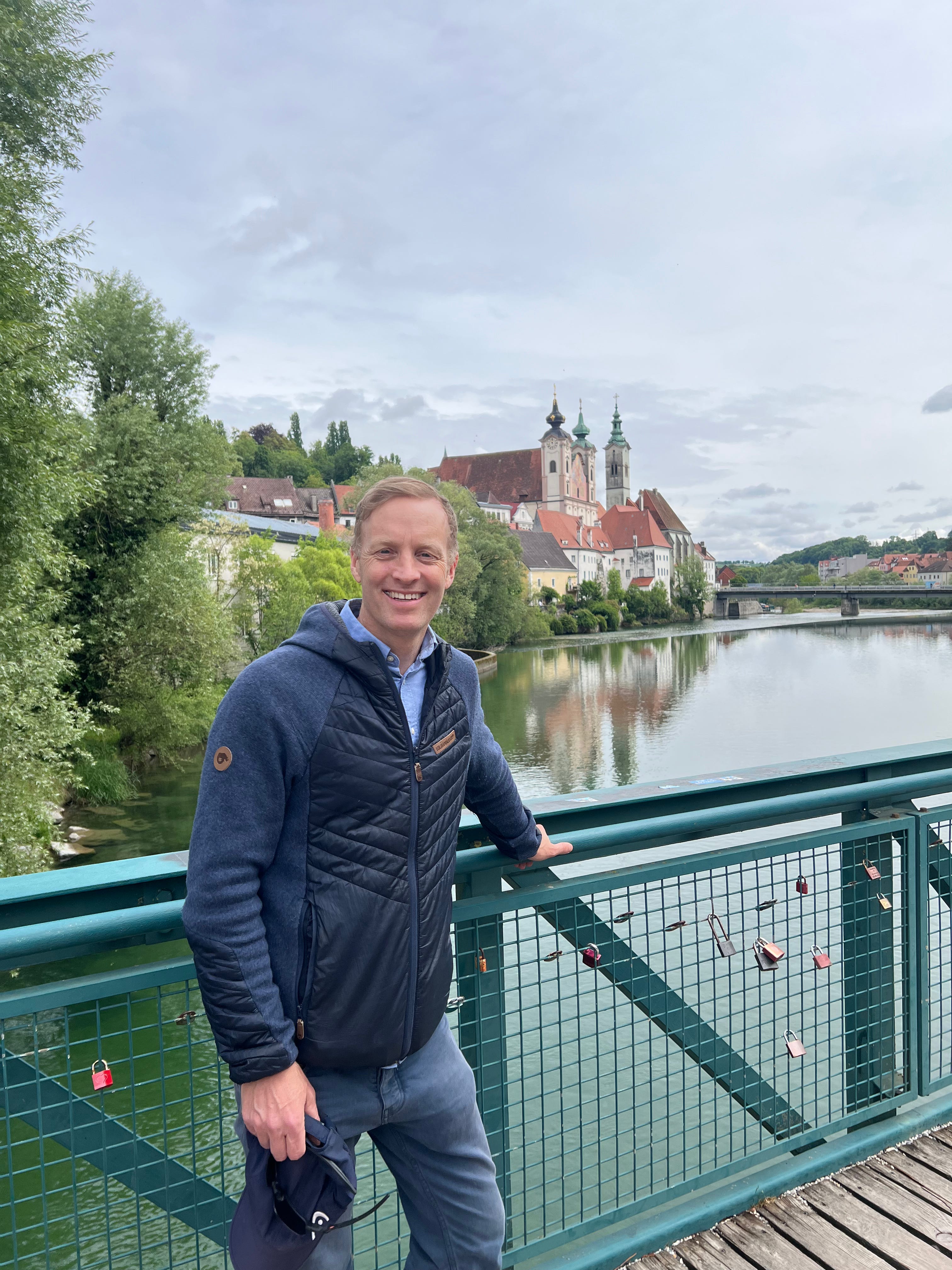
Steyr is a colourful little town at the confluence of two rivers, the Enns and the Steyr. It is a town of water and cobbles and town houses with roofs pitched so sharply they look like witches’ hats. It is ludicrously picturesque – some neighbourhoods feel like a miniature version of Prague, others like the backdrop to a German fairy-tale. But I’d spent most of the time confused, love-sick and slightly hung-over. Retracing my steps this morning brought back a Proustian flood of both wistful and shame-faced nostalgia. I had just turned 20 years old and had a lot of growing up to do. And when I first arrived, I hated Steyr with a passion.
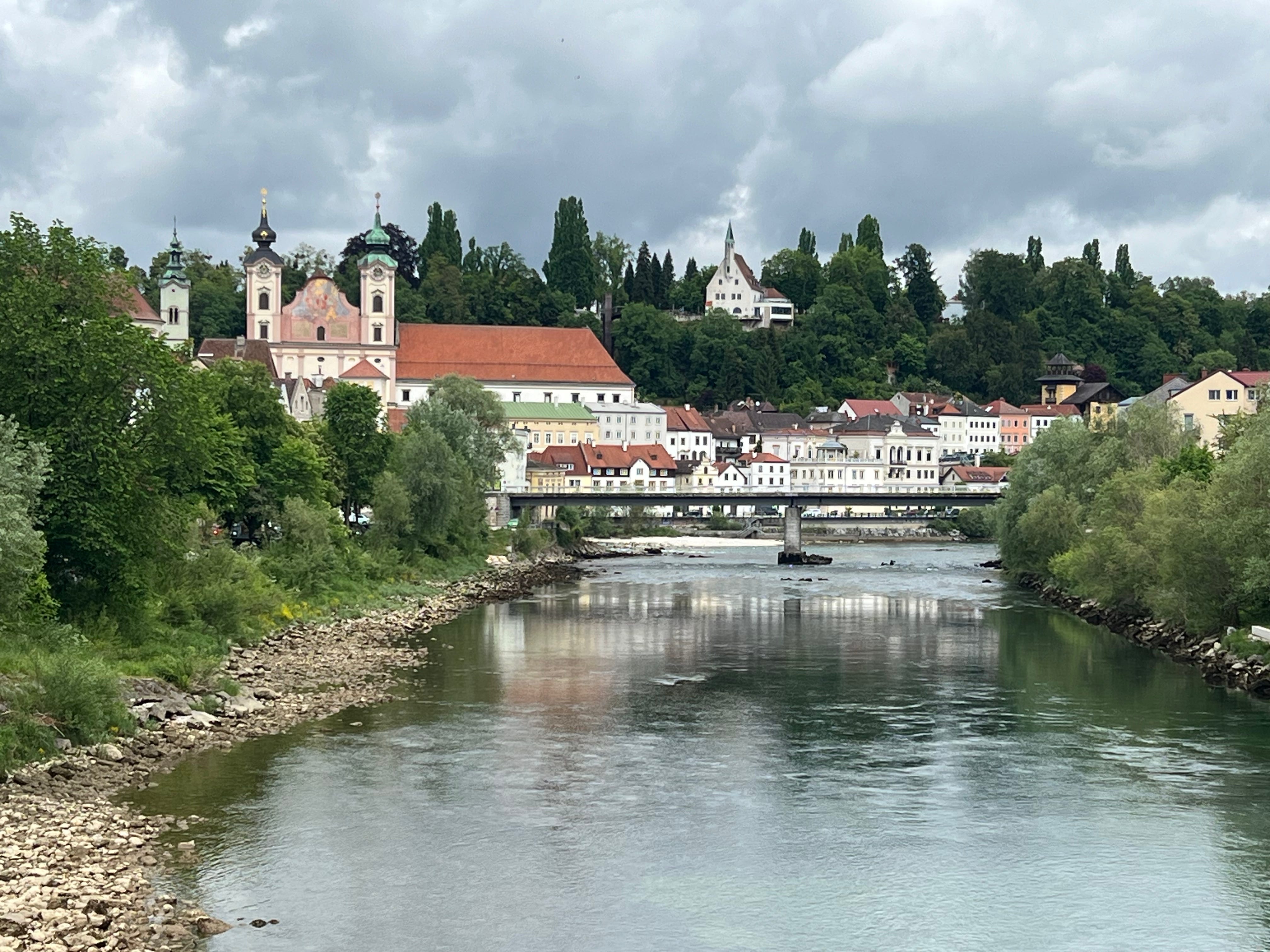
A town I hated at first sight
My job was in a school, a huge building nestled next to a twin-spired 17th century Jesuit church. A 15-year-old Hitler, the locals quickly told me, had studied there for a period starting in 1904, but he failed German, mathematics and stenography and wasn’t allowed to graduate.
In the first week of October 1999, when I stumbled into the city, alone with a backpacker’s rucksack, Austria’s Nazi past was the talk of Europe. It was dark by the time I got there on a branch-line train and it was pouring with rain. The English teachers from the school had organised a “welcoming” evening for me in a bar in the Wehrgraben neighbourhood. But they were glum and grumpy when I arrived, grumbling into their beer.
The Austrian parliamentary elections had been held a couple of days earlier. Jörg Haider’s FPÖ came second, winning nearly 27% of the vote, the best result in the Freedom Party’s history. Haider had made sympathetic remarks about Nazi employment policy and attracted neo-Nazis to his rallies. Europe, which now seems to shrug over such matters, was outraged; everyone was talking about Austria and, after a half-hearted effort at welcoming me, the teachers, social democrats to a man, got back to muttering among themselves in dialect-tinged German that I could barely understand.
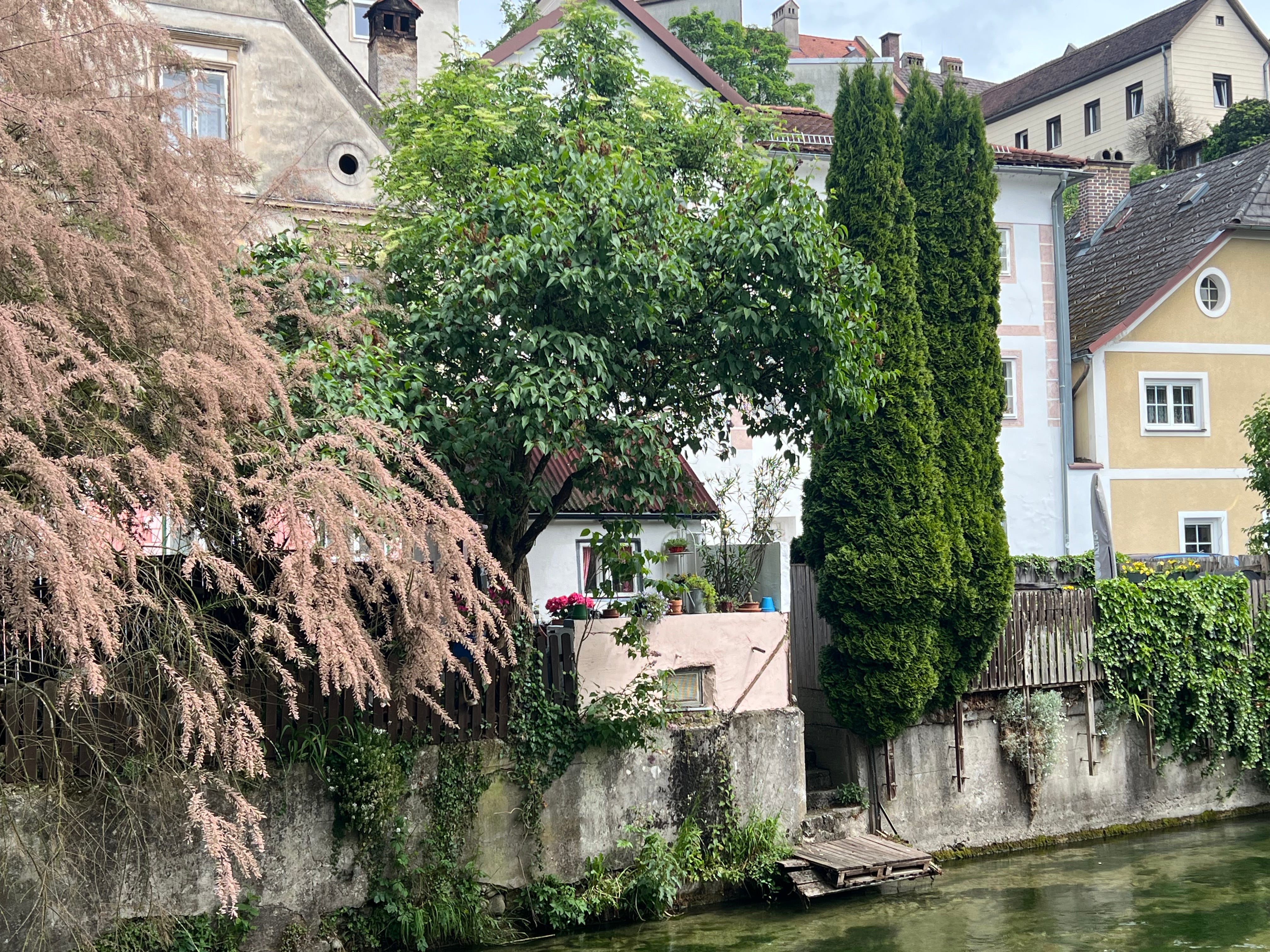
After a couple of drinks I headed out into the rain. I had to find a place to stay for the night before spending the next week finding a permanent place to stay. There was only an institutional youth hostel in my price range. I was the only guest. I remember lying my rucksack down, lying on what felt like a prison bed, looking at the rain still splashing off the window panes, and wondering “What the hell am I doing here?”
The girl in Paris
My heart was in both northern England and Paris; anywhere but small-town Austria. My Modern Languages degree at Durham University required me to spend my third year abroad in a country that spoke one of the two languages I was studying — French and German. You could study or work as a language assistant and since that offered money, I thought that would be more fun. But as I lay in the steel-framed youth hostel bed, I thought of the close friends I had made over two years in Durham, now gathering in the pubs I loved as they embarked on their final year while I was friendless in Steyr. And I thought of Paris.
In the first weeks of that summer I’d met a girl in Berlin, followed her to Paris and spent 8 blissful weeks sharing a tiny flat with her in the French capital, waiting tables and swanning around in cafés and sharing picnics of couscous and cheap wine in front of iconic Parisian landmarks. I’d never been so happy, I’d never been so in love. I stayed in Paris until 2 days before I had to get to Austria, with a final promise to myself and Rachel that I’d just be away long enough to save up a plane ticket back.
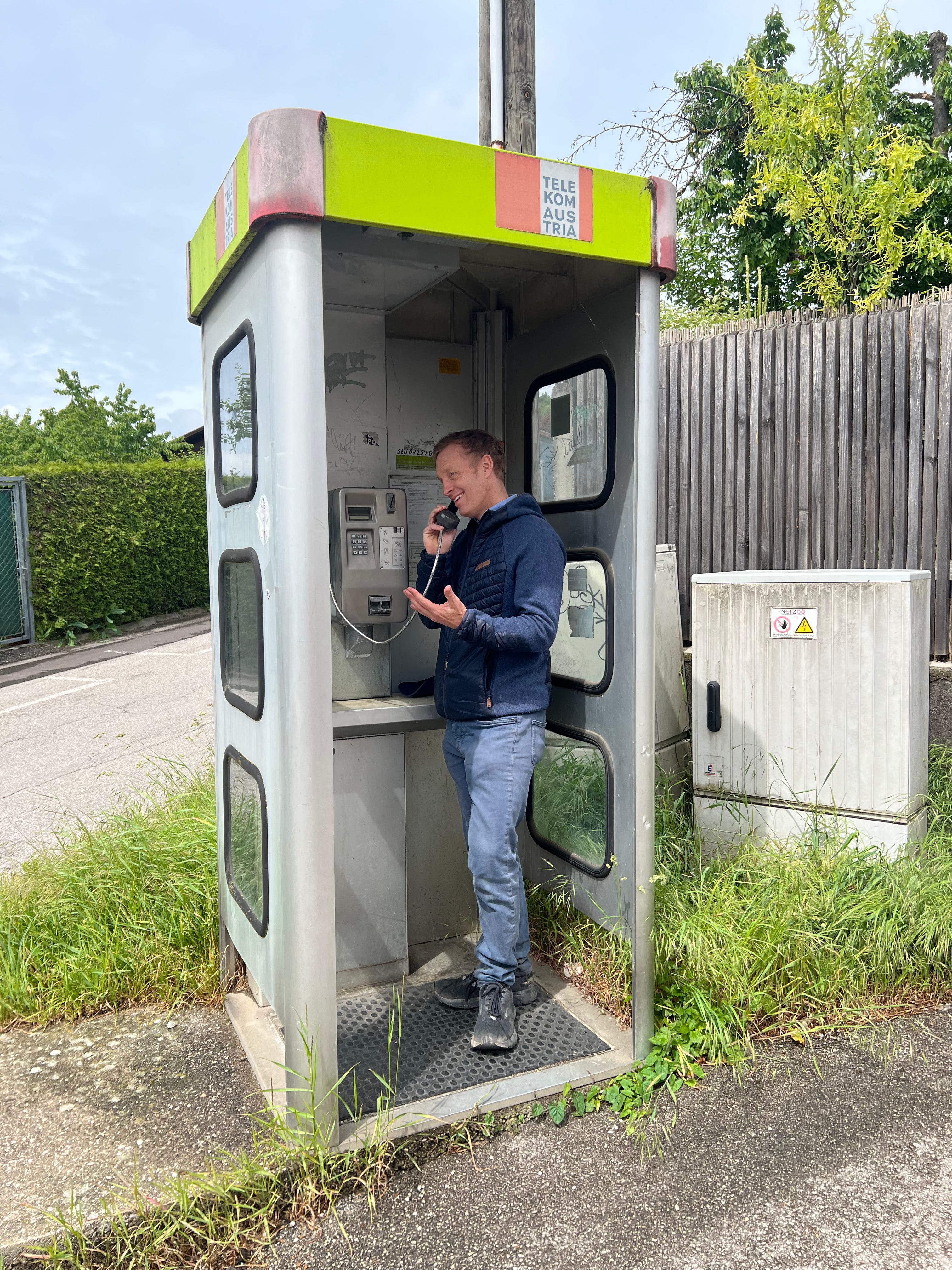
So, throughout that winter, I had to stand in an open-doored telephone box, thrusting coins into a slot and trying not to say “yes, get on with it,” as she told me anecdotes from her day in a Parisian office. Over seven difficult months, interspersed with train rides to and from Paris, I felt romance slip away alongside those shiny Schilling coins.
Paradise, in theory
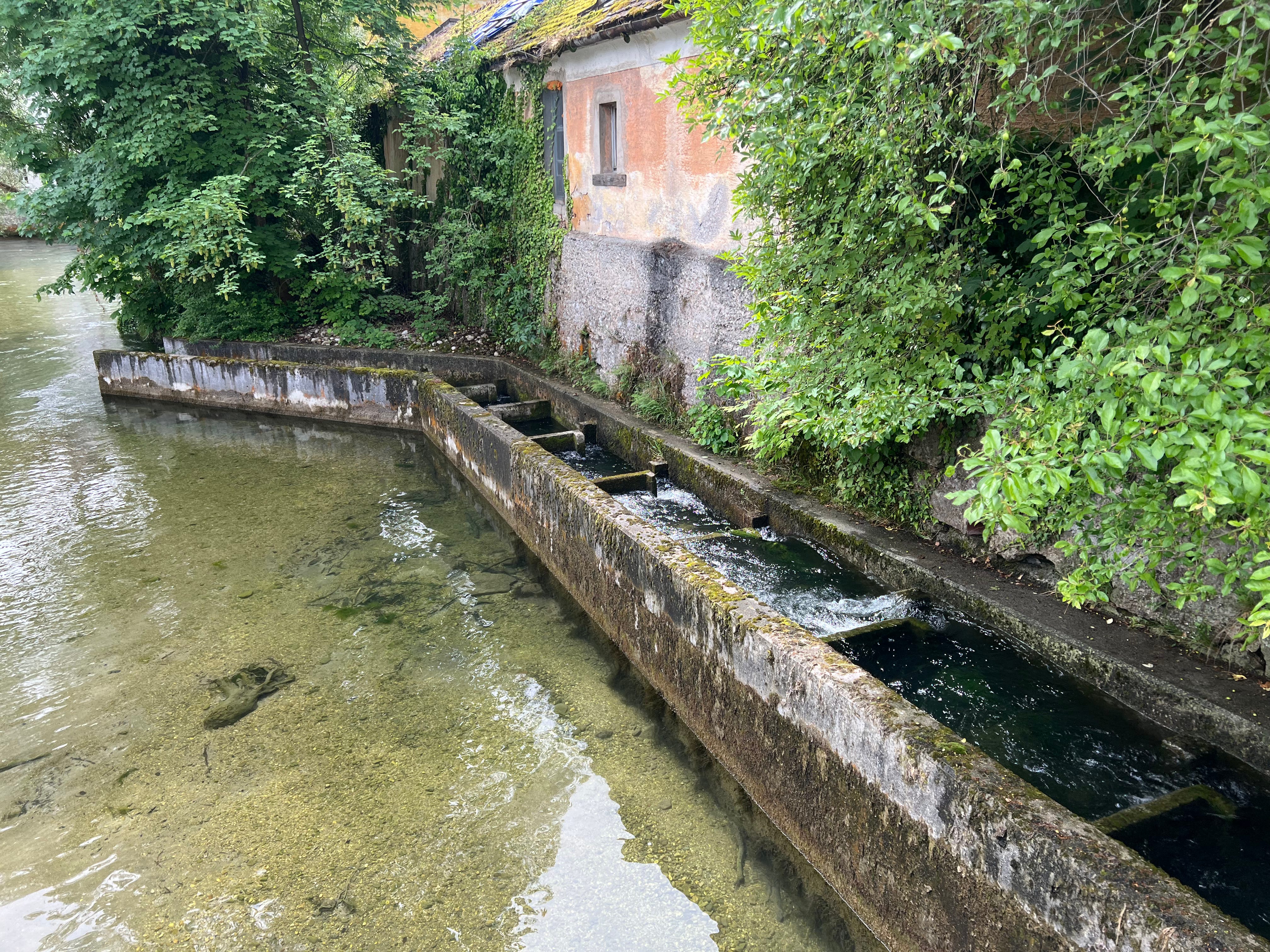
By the end of that first week I had a flat in the Wehrgraben neighbourhood where I’d first met the teachers. It was a short walk to school on a narrow cobbled road that follows a mill canal, all part of a works waterway dating back to the 13th or at the latest 14th century, built to harness the energy of the Steyr river for the workshops and factories along its banks. The old factories, now repainted in mustard and maroon, look like models. There are little benches to sit and watch the fish dart around in incredibly clear water. The neighbourhood is home to the Röda, an iconic music and cultural venue on the site of an abandoned woodcarving workshop that sees itself as a socially shaping force. It was only two years old when I arrived and bristling with energy and intent. It should have been paradise but for the first months I thought only of weekend escapes.
The problem for me was that Steyr wasn’t a university town — yes, the Campus Steyr of the University of Applied Sciences Upper Austria had been founded in 1995, but in the first years there were just a few dozen students. That made it hard to find an appropriate place to stay too. I’d found a tiny flat where I had to cross a cold hall to a separate bathroom. The landlord lived above and shouted very loudly at his children. So I would escape to see other language assistants in Salzburg as soon as school finished on Friday.
We’d formed a little community after a joyous four days of training for the new role in the mountains of Saalbach-Hinterglemm, where a few rudimentary seminars had been interspersed with hikes on sun-splashed alps and long nights of partying. Steyr, less than a couple of hours by car from Vienna, was officially in Western Austria as far as language assistants were concerned. We were allocated placements on a sort of lottery system. When we finished our training weekend and headed our separate ways, many were going to the major cities of western Austria — Innsbruck, Salzburg or Klagenfurt — where they would hang out in the evenings with the cliques we had formed. The ones I envied most were headed to towns that doubled as ski resorts. Steyr was picturesque but that is not what you were looking for at the age of 20.
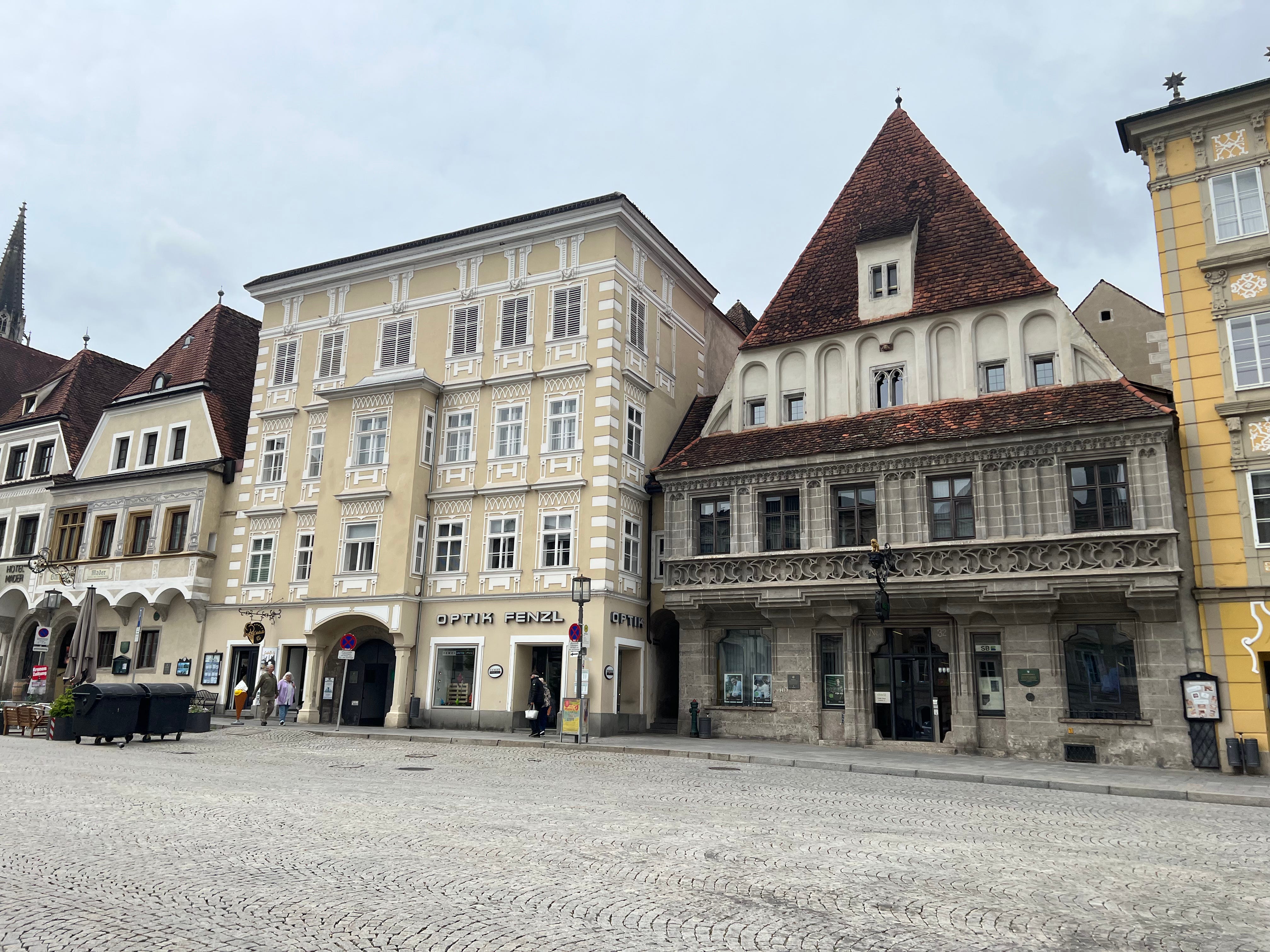
During the week, I spent a lot of time in a telephone box. I made a slightly resentful pilgrimage there this morning. We might be justifiably wary about the nefarious influence tech-bros have had on our relationships, but if you grew up in a world where Skype, Zoom, FaceTime and WhatsApp already existed, let me tell you about my evenings in Steyr: I couldn’t get a proper mobile phone contract because I wasn’t staying in Austria long enough, foreign calls cost at least the equivalent of a euro a minute and, although there was a computer with internet at the school, Rachel had announced that emails were “for geeks” and an inappropriate form of communication for a romantic relationship.
Why am I writing this self-indulgent text? I realise it is beginning to sound like an over-privileged misery memoir. Well, partly as a psychological response to my Proustian walk through Steyr this morning, partly because I want an excuse to publish my snapshots of the extraordinary beauty of Steyr on a spring morning. But it is also because I have spent the day grappling with why I ended up going back to Austria and staying in Austria and — I now have an Austrian wife and a half-Austrian child — making it my permanent home, when I spent those first few months miserable and plotting my escape.
Partly, I suppose, it is because week by week I felt more and more at home. I had some fun nights out, I explored the gorgeous countryside south of Steyr on a bicycle and, once they had recovered from the shock of election day, the teachers were very kind to me. Fatefully I found one other Englishman in the town. He was running an Irish pub under a bridge and he gave me free beer if I sat at his bar and kept him company. This was not good for my German, my health or my reputation at the school. Over the past 25 years, I have met some of the pupils I worked with and asked them what they remembered about my time in their school. They said they remembered me looking red-eyed at the coffee machine at 7.50am. For years, I tried to write the whole ignoble year out of my mythologised biography, but now, a quarter of a century on, I am more forgiving. If you send a 20-year-old British student to a small town with no contacts, what do you expect?
A microcosm of the whole country
But also because I was on my own a lot, I got to really explore Steyr, its beauty, its history and also its dark side. Over the years I’ve come to see this little town as a microcosm of the whole of Austria: breathtaking beauty cheek by jowl with a dark past that is never quite buried, socialist pride and far-right temptation running like the two rivers through its heart.
The town is built on craft and industry — on the ability to make things with extraordinary precision. The Werndl family turned a small armaments workshop into one of the great weapons factories of the 19th century; later came the cars, the trucks, the tractors that bore the Steyr name around the world. The medieval knife-makers of the Wehrgraben, hunched over their grinding wheels in the mill canal’s workshops, were the ancestors of an industrial tradition that never really stopped. Even Schubert felt the creative energy of the place — he came here in 1819 and was so enchanted that he performed the Trout Quintet here, one of the most joyful pieces of chamber music ever composed, the shimmer of the river audible in every bar.
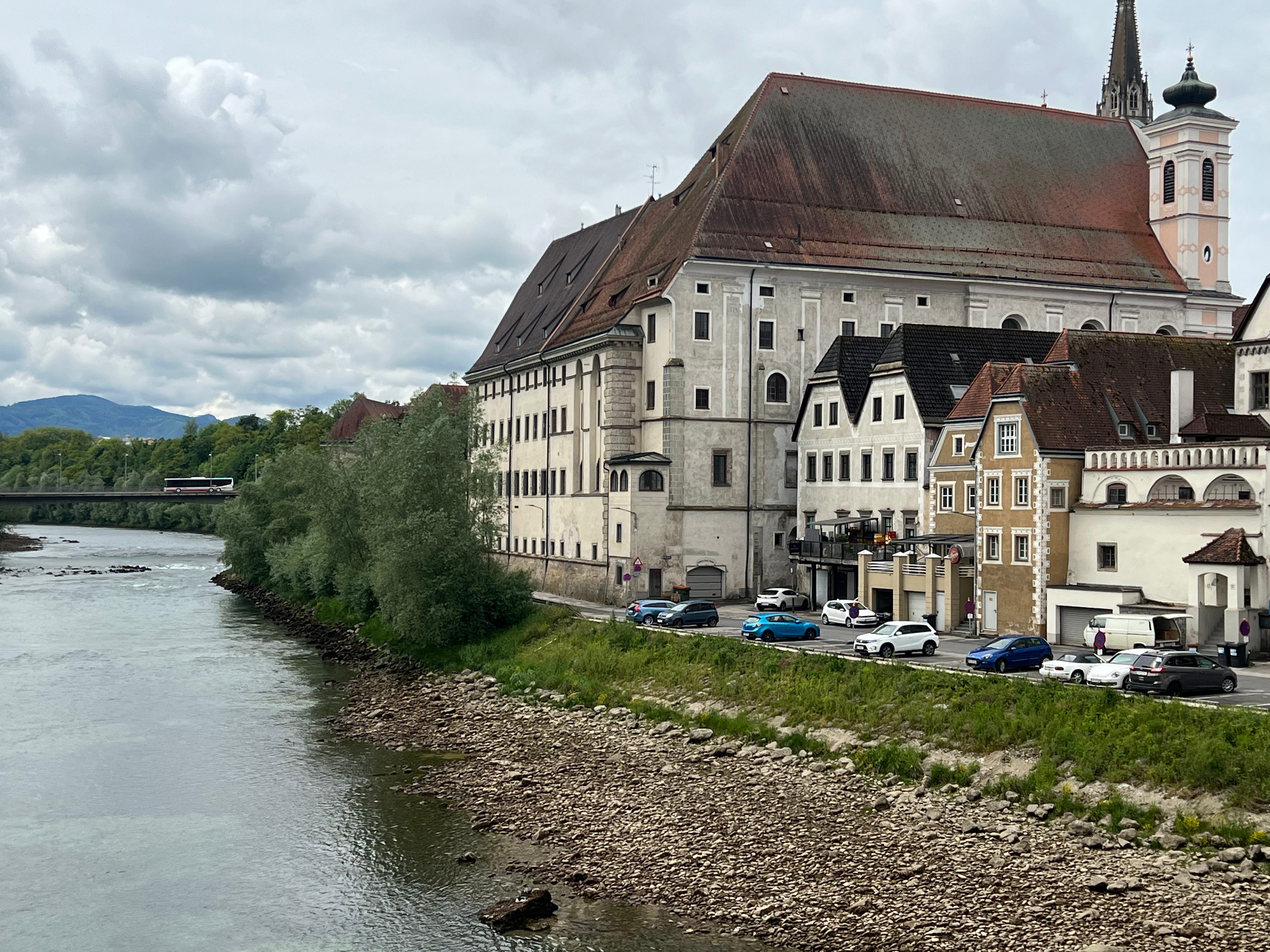
But that same genius for making things was put to the darkest possible use. The school where I taught every day, the BRG on the Michaelerplatz, has its own uncomfortable connection to the Nazi period even beyond Hitler’s failed year. Just steps away, built into the hillside beneath the twin towers of St. Michael’s Church, is the Stollen der Erinnerung, a former air raid shelter that now serves as a memorial to the forced labourers who were worked to exhaustion and death in the Steyr-Werke factories during the Second World War, part of the vast network of camps connected to Mauthausen. I would walk past it on my way to teach irregular verbs to teenagers. The tunnel is still there, patient and dark, insisting on being remembered.
And underneath everything — underneath the beauty and the industry and the history — is the water; both generous and dangerous. The town exists because of its rivers, the Steyr and the Enns, whose confluence beneath Lamberg Castle gave the settlement its reason for being, its mill power, its trade routes, but also its destructive floods.
When the rivers turned
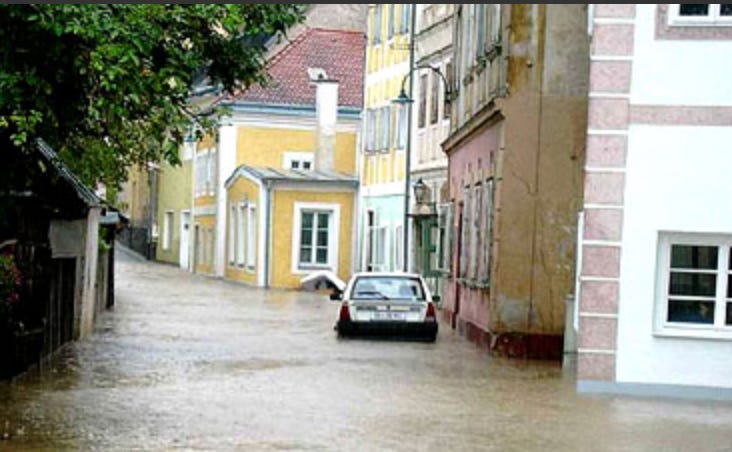
It was because of those floods that I first returned to Steyr, two years after I left. By now I was a callow young journalist, notepad and microphone in hand, covering the catastrophic floods of August 2002 that had devastated towns up and down the Enns valley. The rivers I had come to love had turned violent.
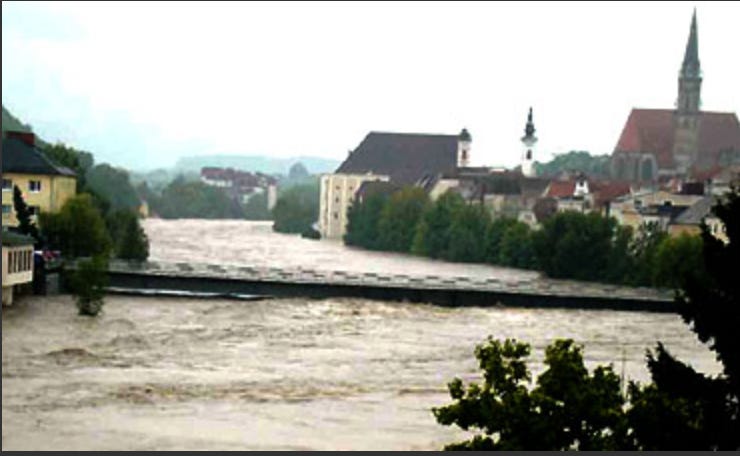
And nowhere was that more painfully felt than at the Hotel Minichmayr — a building that has stood at the precise point where the Steyr meets the Enns since 1534, one of the great survivors of the town’s long history with water. I found the owner, an older woman, standing in the wreckage of her ground floor, in tears. I remember finding a former student and his family trying to rescue their possessions from a basement where the water was shoulder high. It was an emotional visit and it came during my probationary period at my new job. There’s an uncomfortable truth here: it was probably by exploiting the chance to report on my former home’s plight that I secured a career in journalism and the job that I still love.
The radio in the night
And it was in Steyr in the later autumn of 1999 that I first heard and fell in love with fm4, a station then only four years old. A school pupil recommended it and I was blown away by this progressive-minded radio station broadcasting partly in English and playing songs from English bands that I’d never heard of because they never got airplay at home. Because I was often alone during the week, because I was often lonely, I listened incessantly — at home, on a portable radio when riding my bike upstream along the Enns. The radio hosts, particularly Stuart Freeman and Hal Rock, with their cheery voices and gentle humour, began to feel like friends. It was the loneliness that made me understand the intimate magic of radio. I started to dream that maybe I could be part of that world. When, just over a year after leaving Steyr, I got the opportunity to work in radio in Ghana, I jumped at it. Little Steyr, where I had felt so lost, was where I somehow stumbled on my path.
A great piece - your experience reminds me a lot of my time as an Assistant in Judenburg and Murau in 1997/98 - taking the Murtalbahn up the valley twice a week. I also have memories of spending a lot of money on the phone - although I had a Festnetz in my Garconniere.